What is a guard tour system?
How checkpoint scanning actually works, the difference between NFC, QR and GPS, and where a guard tour system ends and full guard management software begins.
Ask anyone who has run a night shift and they'll tell you the oldest problem in the trade: how do you know the guard actually walked the 2am round, and didn't click through it from a warm guardroom? A guard tour system is the technology built to answer that one question — and over the last few years it has quietly become the entry point to something much bigger.
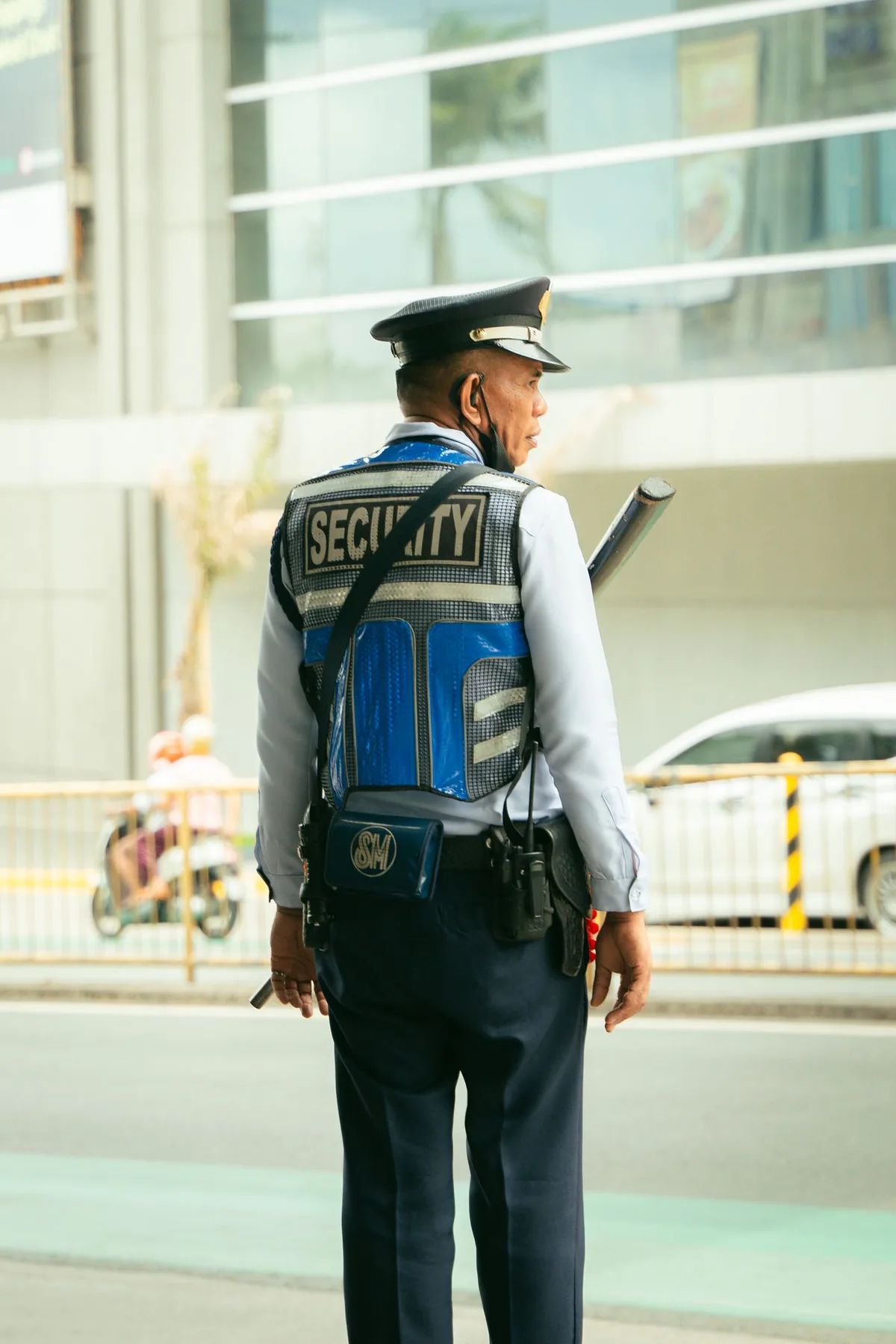
What a guard tour system is
A guard tour system is a way to verify that a security guard physically visited a set of checkpoints, in the right order, at the expected times. The guard carries a device — usually a phone or a rugged handset — and scans checkpoints placed around the site. Each scan is time-stamped and, on modern systems, GPS-tagged. A supervisor can then see, at a glance, which rounds were completed, which were missed, and which ran late.
The idea isn't new. The original guard tour device was the watchman's clock: a physical clock the guard carried and "punched" with keys chained to each station. It proved the key was turned — not much more. Today the same job is done by an app and a set of electronic checkpoints, with far more that can't be faked.
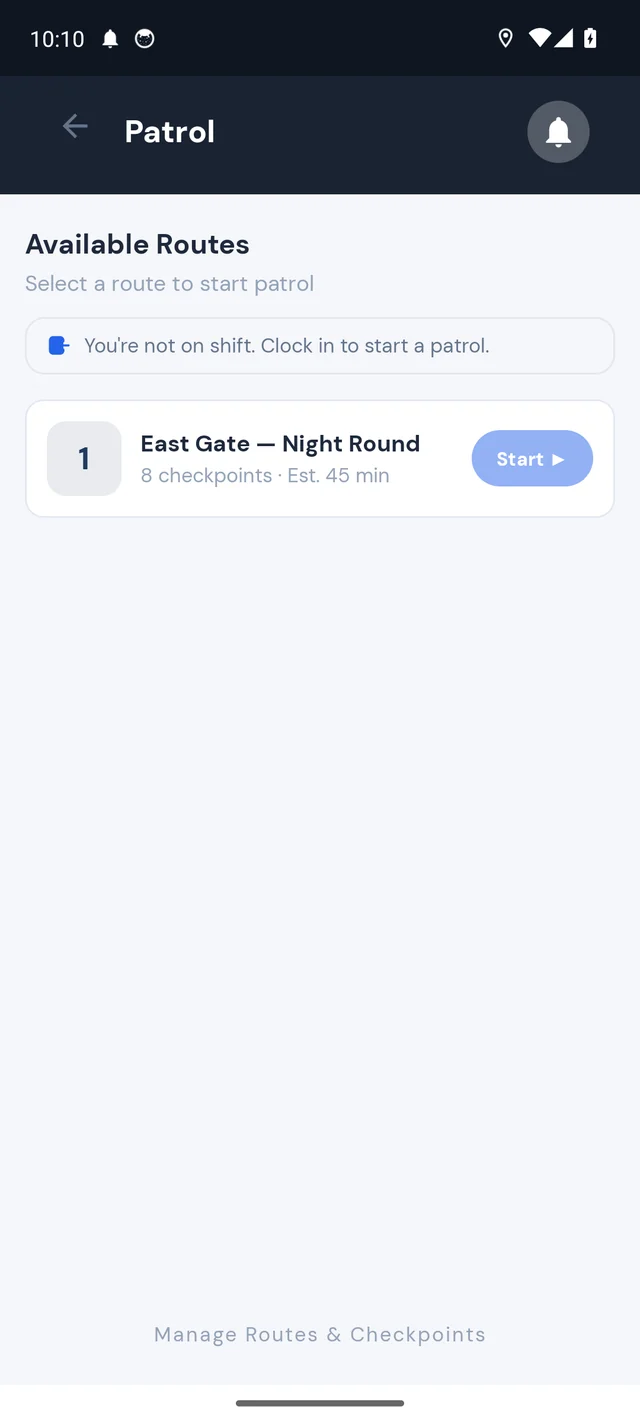
How it works: checkpoints, routes and scans
- Checkpoints — small tags or codes (or a GPS location) fixed at key points: a gate, a rooftop, a server room, the far corner of a yard.
- Routes — an ordered list of checkpoints with an expected cadence, e.g. "eight points, every hour, 18:00–06:00."
- Scans — the guard taps or scans at each checkpoint; the system records the time, the location and who did it.
- Verification — completed, missed and out-of-sequence rounds are flagged, and a good system raises an alert the moment a round is skipped, not the morning after.
NFC vs QR vs GPS checkpoints
The three common checkpoint methods trade off cost, convenience and how hard they are to cheat:
| Method | Strength | Watch out for |
|---|---|---|
| NFC tag | Guard must be physically present to tap it; works offline; hard to fake | Needs NFC-capable devices |
| QR code | Cheap; works with any phone camera | Can be photographed and scanned from elsewhere |
| GPS geofence | No physical tag to install or replace | Signal drift indoors; needs anti-spoofing checks |
The strongest systems don't rely on one method — they combine a physical scan (NFC or QR) with a GPS stamp on every checkpoint, so a scan is tied to both a tag and a location.
Where a guard tour system ends — and guard management begins
Here's the shift worth understanding. A guard tour system proves patrols. But a real security contract needs more than patrols: guards have to clock in to the right post, incidents have to be captured defensibly, an occurrence book has to hold up, the gate has to be controlled, and clients want reports they can trust. All of that together is guard management software — of which the guard tour is one important part.
The category has moved with it: from proving activity (a checkpoint was scanned) to proving service (a record a client, insurer or tender can actually rely on). That's why tamper-evidence matters — anyone can print a PDF after the fact; far fewer can hand over a signed, sealed record that breaks if a single entry is altered.
What to look for in a modern guard tour system
- ✓Real-time missed-round alerts — you find out at 2:05am, not at the morning handover.
- ✓GPS on every scan — a checkpoint tied to a location, not just a tag.
- ✓Offline capture — dead-signal sites still record, and sync when the connection returns.
- ✓Tamper-evidence — scans and records that can't be quietly edited after the fact.
- ✓A device guards will actually use — one tap, no training, survives a night shift.
- ✓A path beyond patrols — the same app should carry shifts, incidents and reporting, so you're not stitching five tools together.
Watch a real patrol turn into proof
Book a fifteen-minute live demo — we'll run a real GPS-verified round, miss a checkpoint on purpose, and show you exactly what the control room and the client see.
Book a live demoFrequently asked questions
What's the difference between a guard tour system and a watchman clock?
A watchman clock was a physical device punched with keys at each station — it proved the key was turned, little else. A modern guard tour system scans NFC, QR or GPS checkpoints, time-stamps and GPS-tags every scan, and flags missed or out-of-sequence rounds in real time.
Do guard tour systems work without internet on site?
Good ones do — the app captures scans, incidents and photos offline and syncs them when the connection returns, so a dead spot never loses a patrol record.
NFC or QR checkpoints — which is better?
NFC requires the guard to be physically present and is hard to fake, but needs NFC-capable phones. QR is cheaper and works with any camera, but can be copied. GPS needs no tag but can drift. The best systems combine methods and stamp GPS on every scan.
Is a guard tour system enough on its own?
It proves patrols, but a full contract also needs clock-in, incident reporting, an occurrence book, access control and client reporting — that's guard management software, of which the guard tour is one part.
← Back to Guardrol — evidence-grade guard management software. See it built for security guard companies, or book a live demo.